Terminating an employee in Kenya — even a genuinely underperforming one — without following due process can result in a claim for wrongful or unfair dismissal at the Employment and Labour Relations Court. The court can award up to 12 months' gross salary as compensation, plus legal costs.
This guide walks you through the legal process for both ordinary termination and summary (instant) dismissal, as set out in the Employment Act Cap. 226.
Two Types of Termination Under Kenyan Law
1. Ordinary Termination (Notice Termination)
Used when the termination is not for gross misconduct — for example, redundancy, end of a fixed-term contract, or mutual agreement. Requires proper notice.
2. Summary Dismissal (Instant Dismissal)
Used only for gross misconduct. Even here, a fair hearing is required before dismissal. Examples of gross misconduct under the Act: theft, fraud, dishonesty, insubordination, being under the influence of alcohol/drugs at work, sexual harassment.
Step-by-Step: Ordinary Termination
- Step 1 — Document the reason: Write down the specific reason for termination. Keep all supporting documents (performance reviews, warnings, etc.)
- Step 2 — Issue written notice: Give the employee a written termination notice. Minimum notice period: 28 days for monthly-paid employees. Or pay salary in lieu of notice
- Step 3 — Calculate terminal dues: Pay all accrued leave days, notice pay (if applicable), and any outstanding salary by the last working day
- Step 4 — Issue a Certificate of Service: The Employment Act requires you to issue a certificate of service to the employee on their last day. This states the period of employment and the nature of work performed
- Step 5 — Update payroll deductions: Notify KRA, NSSF, and NHIF of the termination and close out statutory obligations
Step-by-Step: Summary Dismissal for Misconduct
Critical: Even for gross misconduct, you cannot dismiss an employee without first holding a fair hearing. Skipping this step is the most common reason employers lose dismissal cases at the Employment Court.
- Step 1 — Suspend pending investigation: Suspend the employee on full pay while you investigate. Do not dismiss on the spot without first investigating
- Step 2 — Issue a show cause notice: Give the employee a written notice detailing the allegations and asking them to show cause why they should not be dismissed
- Step 3 — Hold a disciplinary hearing: Give the employee at least 48 hours' notice of the hearing. Allow them to bring a colleague or trade union representative. Document everything
- Step 4 — Make a decision: Based on evidence from the hearing. If dismissal is justified, issue a written dismissal notice stating the reasons
- Step 5 — Pay terminal dues: Pay accrued leave, outstanding salary up to the dismissal date. No notice pay is required for genuine gross misconduct
- Step 6 — Issue Certificate of Service: Still required, even for dismissed employees
Termination During Probation
Many employers believe they can dismiss probationary employees freely. This is only partially true. Under the Employment Act, the probationary period allows either party to terminate with 7 days' notice (or less if stated in the contract). However, dismissal during probation for discriminatory reasons (pregnancy, disability, ethnicity) is still illegal and actionable.
Redundancy: A Special Case
If you're terminating due to business restructuring, closure, or reduction in workforce, this is a redundancy — not ordinary termination — and carries additional requirements:
- Notify the employee and their trade union at least 1 month in advance
- Notify the Director of Labour in writing
- Use a fair selection criterion (usually last-in-first-out, or LIFO)
- Pay redundancy pay: 15 days' basic wages per year of service
What Happens If You Get It Wrong
The Employment and Labour Relations Court handles wrongful dismissal cases. If the court finds the dismissal was unfair or procedurally improper, it can order:
- Reinstatement of the employee (rare but possible)
- Compensation of up to 12 months' gross salary
- Payment of all terminal dues not yet paid
- Legal costs
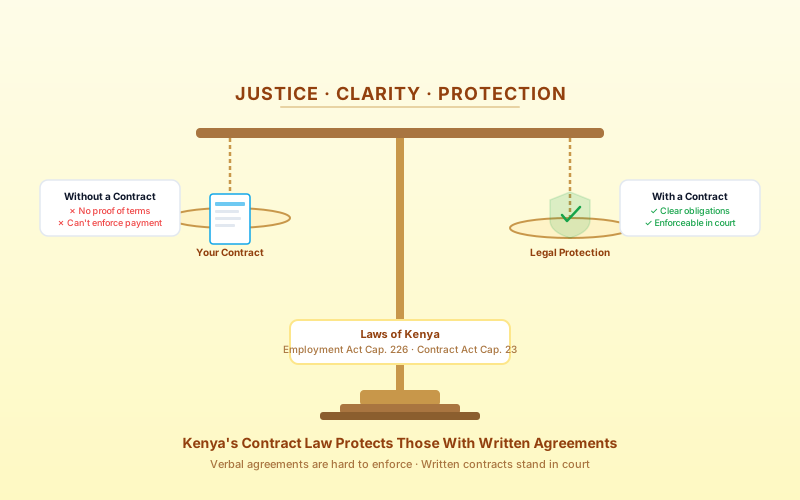
Prevention is cheaper: A well-drafted employment contract with clear performance standards, disciplinary procedures, and termination clauses makes the process cleaner — and significantly reduces your litigation risk.
Generate your Employment Contract in 2 minutes
Kenya-compliant · Professional PDF · KES 499 · First 2 downloads free
Get Your Employment Contract →